There are many things I like about our San Francisco apartment, but one thing I don't like about it is that it's rather cold. It's the only bottom-floor unit in the building, and especially in winter we get almost no direct sunlight. It does have dual-pane windows, but I don't think the walls or floor are particularly well-insulated.
The only built-in heat source is a resistive electric heater in the wall. It's not very powerful -- when we run both the wall heater and a 1500 W space heater, it takes 4-6 hours to raise the temperature of the living room and bedroom from ~60ºF to ~68ºF, pulling a total of ~3 kW the whole time. At ~$0.36/kW, this costs in the range of $6-10 per day, and is the majority of our electricity consumption. This is more than the energy needed to drive my Volt to work and back!
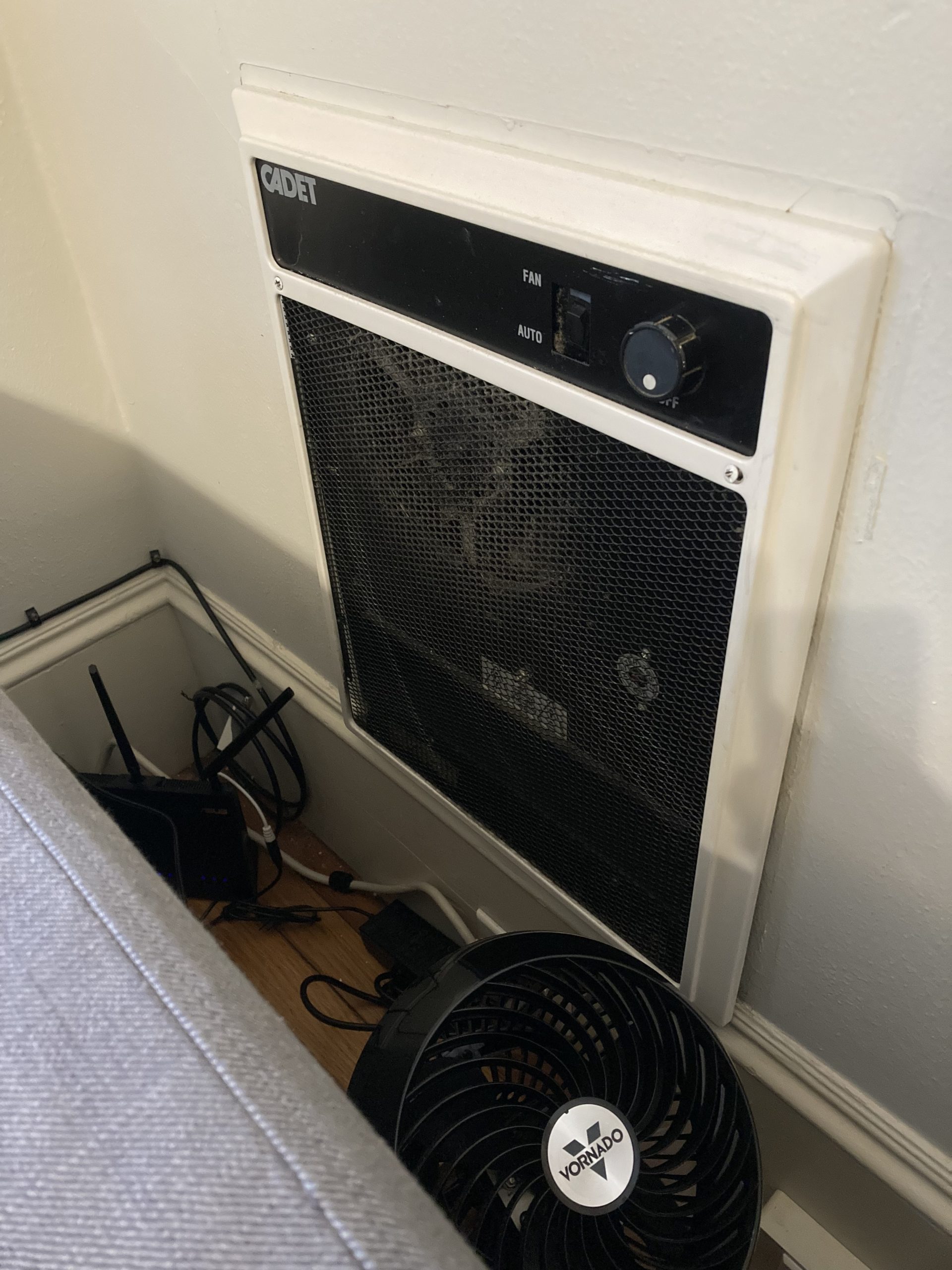
So we've been layering up and tolerating lower temperatures, which is fine, but I thought maybe we could do better.
I first really learned about heat pumps while working at A10. In short, they use the refrigeration cycle to transfer heat energy from somewhere (e.g., from deep in the ground or from the outside air) to where you want it (the indoor air). They're great from a sustainability standpoint because they don't use combustion and are many times more efficient than resistive electric heat. As a renter, I can't install a fancy ground-source heat pump system for my apartment, but there are some portable heat pumps on the market that are just A/C units with the ability to run in reverse.
I ended up with a lightly used Whynter ARC-1230WNH "portable air conditioner with heat," purchased via Craigslist for $450 (retail price ~$700). This unit has a max power draw of ~1.3 kW and a max heat output of 14,000 BTU/hr (4.1 kW). That's like running almost three space heaters while using less power than a single one! By my calculations, this thing could pay for itself within a few months.
This model has some other fancy features too, like the inverter drive, water pump, and Wi-Fi connectivity (which I may or may not use).
There were a couple of things I looked for in a unit:
- I wanted a portable unit rather than a window unit, to simplify installation + in case we move to a non-ground-floor apartment in the future.
- Dual hoses, because portable units with just a single exhaust hose create negative pressure and cause cold air to be pulled into the building. (For more, see this great Technology Connections video.)
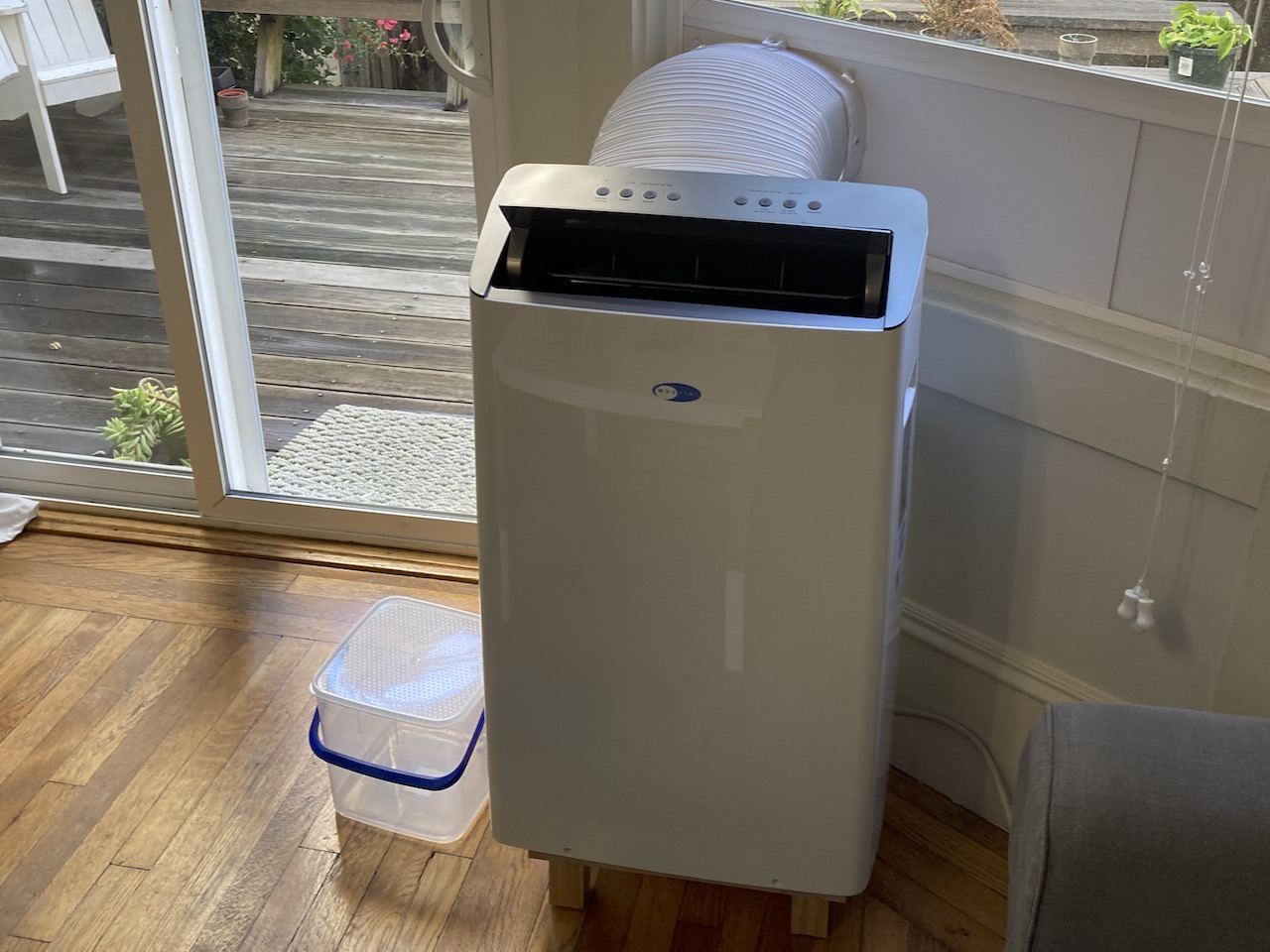
Initial impressions are very positive. Install was pretty simple. It took only 20 minutes to raise the temperature from 60ºF to 64ºF, and around an hour after start to reach 68ºF. So much faster than the resistive heaters! The unit looks pretty nice. And it's super neat to stick a hand outside and feel how cold the exhaust air is.
So this seems like a pretty impressive win-win. Our apartment is warmer, and we are consuming less energy than we were previously!
There are a couple of downsides and learnings:
- Noise. The unit is not unreasonably loud, but it is louder than the resistive heaters, mostly due to the compressor noise. The noise gets pretty tiresome after a while. When it's reached the set point, the compressor cycles on and off every few minutes. Decreasing the fan speed doesn't help much. This could have been avoided with a window unit rather than a portable unit.
- Despite having both intake and exhaust hoses, it does seem to create some negative pressure.
So maybe I shouldn't have ruled out the window units so early, but overall I'm pretty happy. I'm looking forward to a significantly warmer, more energy-efficient winter.
